May 21, 2026
The suspension system is the silent guardian of your vehicle’s stability, ensuring that every journey remains smooth and controllable regardless of road conditions. Unfortunately, because many of its components are tucked away out of sight, drivers often ignore the subtle warning signs of wear until a minor annoyance becomes a major safety hazard. Understanding the cascading failures that occur when maintenance is neglected is essential for every vehicle owner who values safety and mechanical longevity.
Compromising Vehicle Handling and Control
One of the most immediate and dangerous consequences of neglecting suspension repairs is a significant reduction in your ability to steer and stabilize the car. The suspension is responsible for keeping all four tires firmly planted on the pavement, especially during high-speed maneuvers or sudden swerves. When shocks, struts, or control arms begin to fail, the vehicle’s center of gravity shifts unpredictably, leading to excessive body roll and a "floating" sensation. This loss of composure means that in an emergency situation, such as avoiding an animal or a sudden obstacle, the car may not respond to your steering inputs with the precision required to avoid a collision.
As components degrade, the time it takes for your vehicle to settle after hitting a bump increases, which can lead to a loss of traction on uneven surfaces. This is concerning as the national fleet continues to age, requiring more diligent oversight from owners. According to Kelley Blue Book, the average vehicle on United States roads is now close to 13 years old. For these older vehicles, the rubber bushings and hydraulic seals within the suspension have often reached the end of their natural lifespan, making the risk of a sudden handling failure much higher than in a newer model.
Accelerating Uneven Tire Wear
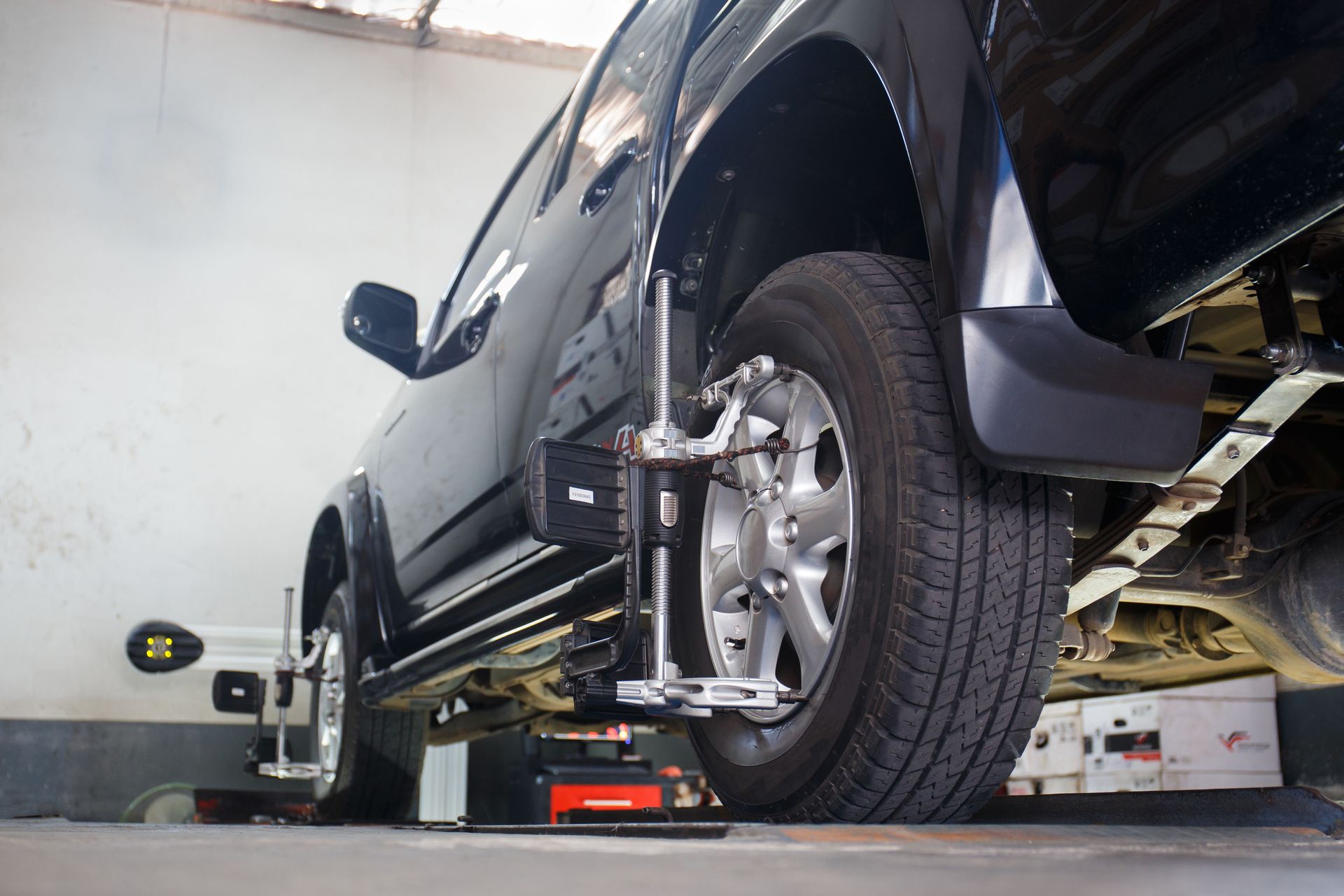
Your tires are the only point of contact between your vehicle and the road, and their lifespan is intrinsically linked to the health of your suspension. When the suspension system is compromised, it can no longer maintain the correct alignment angles—camber, caster, and toe. This misalignment causes the tires to scrub against the road surface at improper angles, leading to "cupping" or rapid wear on the inner or outer edges of the tread. If you delay necessary suspension repairs, you will likely find yourself spending hundreds of dollars on premature tire replacements long before the rubber should have worn out.
Beyond the financial cost, uneven tire wear creates a significant safety risk, particularly in wet or icy conditions. Tires with cupped or bald spots cannot effectively channel water away from the contact patch, which dramatically increases the likelihood of hydroplaning. Furthermore, the vibrations caused by unevenly worn tires place additional stress on the wheel bearings and steering rack, creating a cycle of mechanical destruction that spreads throughout the entire undercarriage. Investing in the suspension today is, in many ways, an investment in the longevity of your tires.
Increasing Braking Distances and Risk
Many drivers do not realize that the suspension system plays a critical role in the efficiency of the braking system. When you apply the brakes, the weight of the vehicle shifts forward; a healthy suspension manages this "nose dive" by distributing the force across all four wheels. If the front shocks or struts are worn out, the vehicle dives too aggressively, which lifts weight off the rear tires and reduces their braking effectiveness. This imbalance can increase your total stopping distance by as much as 20%, which can be the difference between a narrow miss and a devastating rear-end accident.
This becomes an even greater liability when the Anti-lock Braking System (ABS) is involved. The ABS relies on sensors to detect wheel slip, but if a worn suspension allows the tires to bounce off the road surface, the sensors receive inconsistent data. This causes the ABS to engage prematurely or incorrectly, further extending the distance required to bring the vehicle to a complete stop. By prioritizing suspension repairs, you are ensuring that your car's most vital safety feature—its ability to stop—remains fully functional when you need it most.
Damaging Secondary Mechanical Components
The suspension system acts as a buffer that protects the rest of the vehicle from the violent vibrations and impacts of the road. When the shocks and struts lose their ability to dampen these forces, the energy is transferred directly into the chassis and other mechanical systems. Over time, this constant jarring can cause engine mounts to crack, exhaust hangers to snap, and even lead to the premature failure of sensitive electronic sensors. What starts as a simple worn bushing can eventually lead to a "domino effect" of broken parts that are far more expensive to fix than the original issue.
The steering system is particularly vulnerable to a failing suspension. Components like tie rod ends and the steering rack are designed to operate within specific tolerances; when the suspension allows for excessive movement, these parts are forced to absorb impacts they weren't designed to handle. Postponing suspension repairs often leads to a "death wobble" or significant play in the steering wheel, making the car feel loose and unrefined. Protecting the secondary components of your vehicle requires a proactive approach to maintaining the primary dampening system.
Reducing Passenger Comfort and Quality
While safety is the primary concern, the impact on the quality of the driving experience is undeniable. A car with a blown suspension will transmit every pebble, pothole, and expansion joint directly into the cabin, leading to a harsh and noisy ride. Passengers may experience "car sickness" due to the excessive bouncing and swaying of the vehicle body on the highway. For many owners of older cars, this loss of comfort is the first sign that the vehicle is reaching a state of neglect that makes daily commuting a chore rather than a convenience.
In addition to the physical discomfort, a failing suspension often produces a chorus of squeaks, groans, and clunks that indicate metal-on-metal contact. These noises are not just annoying; they are the sound of your vehicle’s structural integrity being compromised. When a driver ignores these audible warnings and skips out on suspension repairs, they are essentially allowing the vehicle to shake itself apart from the inside out. Maintaining a quiet, smooth ride is one of the simplest ways to preserve the joy of driving and the value of your automotive investment.
Lowering Resale and Trade-In Value
When the time eventually comes to move on to a new vehicle, the condition of the suspension will be a major factor in determining your car’s market value. Professional appraisers and savvy private buyers can easily detect a neglected suspension during a brief test drive. A car that wanders in its lane, dives under braking, or makes loud noises over bumps is a massive red flag that suggests the owner has also neglected other areas of maintenance. Consequently, you may be forced to accept a significantly lower offer, or worse, find that your vehicle is "unsellable" without thousands of dollars in restorative work.
Maintaining a vehicle's suspension is a vital component of long-term automotive health that should never be sidelined. By addressing wear and tear early, you protect your tires, steering, and safety from the cascading effects of mechanical failure. Ensuring your suspension remains in top shape is the best way to guarantee that your vehicle continues to provide a smooth and secure ride for years to come. If you want to learn more about suspension repairs, contact Littleton Auto Repair today to get started!